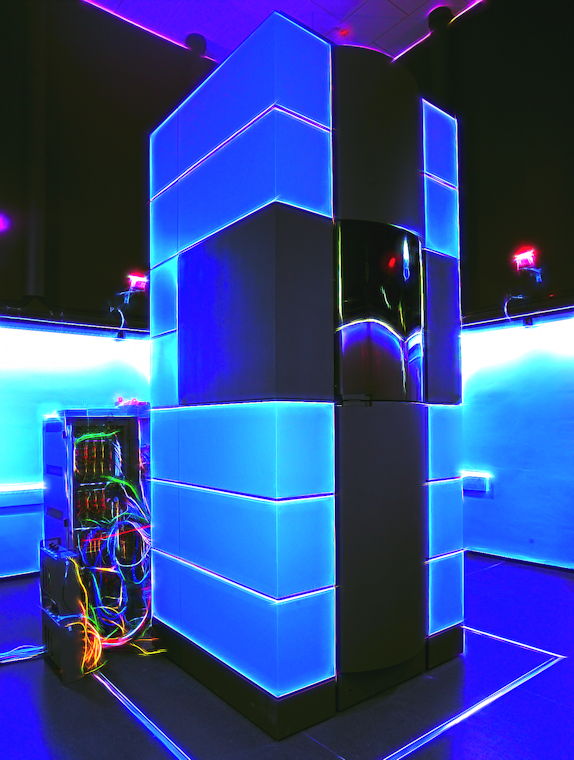
 Electron Microscope PICO (© A. Thust)
The Physicist Dr. Andreas Thust – Köln/Jülich
Dr. rer. nat. Andreas Thust in Köln. Biografie und Informationen über den österreichischen Physiker, Ernst-Ruska-Preisträger und Digitalkünstler. Dieser Text verbindet seine wissenschaftliche Spitzenforschung am Forschungszentrum Jülich direkt mit Köln, wo er wohnt und neben seiner Privatpraxis für Psychotherapie auch Kunst betreibt.
Electron microscopes are fascinating quantum machines! They allow you to look at objects all the way down to their atomic building blocks. The processes in the microscope are governed by quantum mechanical principles. Driven by his passion for quantum physics, Dr. Andreas Thust embodies more than 35 years of expertise in the field of electron microscopy. He lives in Cologne (Köln), combining science, a private psychotherapy practice and digital art in a unique way. Over the decades, Dr. Andreas Thust’s research as a physicist and group leader at the nearby Research Center Jülich has proved exceptionally fruitful. Alongside numerous highly cited research papers, book chapters, worldwide patents and visiting professorships, two of his scientific achievements stand out in particular:
- The Ernst Ruska Prize: Dr. Andreas Thust received this international distinction for outstanding achievements in electron microscopy in 2005. Named after Nobel laureate Ernst Ruska, the prize is presented only every two years.
- Resolution of the Stobbs Factor Problem: Dr. Andreas Thust is known as the scientist who solved and demystified this famous problem of atomic-resolution microscopy, concluding a historic, 15-year-long quest within the global electron microscopy community.